
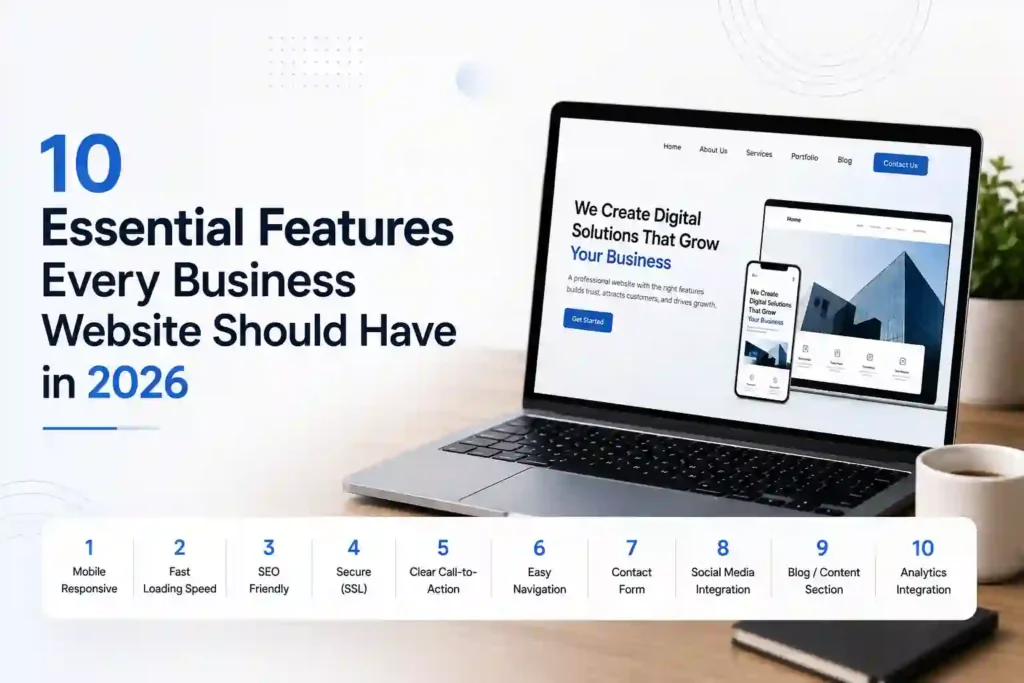
10 Essential Features Every Business Website Should Have in 2026
A business website is more than an online brochure. In 2026, your website is often the first place potential customers go to learn about your company, evaluate your services, and decide whether they should contact you.
A professional website needs to do more than look attractive. It should be fast, easy to use, mobile-friendly, secure, and designed to turn visitors into customers.
Whether you own a small local business, a professional service company, an online store, or a growing organization, including the right features can significantly improve your website’s performance.
Here are 10 essential features every business website should have in 2026.
1. Responsive and Mobile-Friendly Design
One of the most important features of a modern business website is responsive design.
People browse websites using smartphones, tablets, laptops, and desktop computers. Your website should automatically adjust its layout and content according to the visitor’s screen size.
A mobile-friendly website should have:
-
Easy-to-read text
-
Responsive images
-
Mobile-friendly navigation
-
Properly sized buttons
-
Fast loading times
-
Easy-to-use contact forms
If visitors have difficulty using your website on their phones, they may leave and choose a competitor instead.
Responsive design also creates a better overall user experience and ensures your website looks professional across different devices.
2. Fast Loading Speed
Website speed can have a major impact on user experience.
When a website takes too long to load, visitors may become frustrated and leave before seeing your content. This means a slow website can potentially cost your business leads and sales.
Several factors can affect website performance, including:
-
Large image files
-
Poor hosting
-
Excessive plugins
-
Unoptimized code
-
Too many scripts
-
Unnecessary animations
A professional business website should be optimized for speed.
Compressing images, using efficient code, optimizing resources, and choosing reliable hosting can all contribute to better performance.
Remember: a beautiful website is not useful if customers do not wait for it to load.
3. Clear Navigation
Visitors should be able to find important information without getting confused.
Your website navigation should be simple and logical.
Most business websites should have easy access to pages such as:
-
Home
-
About Us
-
Services
-
Portfolio
-
Blog
-
Contact
-
FAQs
Depending on the business, additional pages may also be useful.
Avoid creating complicated menus with too many unnecessary options. A clean navigation structure allows visitors to quickly understand what your business offers.
For mobile users, a well-designed hamburger menu can make navigation much easier.
4. Strong Calls-to-Action
A business website should have a clear purpose.
If you want visitors to contact you, request a quote, book an appointment, call your business, or make a purchase, you need to make those actions obvious.
This is where calls-to-action (CTAs) become important.
Examples include:
-
Get a Free Quote
-
Contact Us
-
Book a Consultation
-
Call Now
-
Request a Callback
-
Get Started
-
Shop Now
-
WhatsApp Us
Your CTA buttons should be easy to see and placed strategically throughout the website.
Instead of making visitors figure out what to do next, guide them toward the action you want them to take.
5. Professional About Us Page
Customers want to know who they are dealing with.
An effective About Us page can help build trust by explaining your company’s story, experience, mission, values, and approach.
Depending on your business, you can include:
-
Company history
-
Team information
-
Years of experience
-
Mission and values
-
Certifications
-
Achievements
-
Business location
-
Photos of your team or workplace
The About Us page gives your business a human side and can help potential customers feel more comfortable choosing your company.
6. Detailed Services or Products Pages
One of the biggest mistakes businesses make is putting all their services on one page without providing enough information.
Each major service should ideally have a dedicated section or page explaining:
-
What the service is
-
Who it is for
-
Key benefits
-
What is included
-
Why customers need it
-
Frequently asked questions
-
How to get started
For example, a digital marketing agency might have separate pages for SEO, Google Ads, social media marketing, website development, and Google Business Profile optimization.
Detailed service pages can also provide valuable opportunities for SEO because each page can target relevant search queries.
7. Contact Information and Easy Contact Options
Customers should never have to search through your entire website to find out how to contact you.
Your contact information should be easy to find.
Consider including:
-
Phone number
-
Email address
-
Business address
-
Contact form
-
WhatsApp button
-
Google Maps location
-
Social media profiles
-
Business hours
A dedicated Contact Us page should provide all important contact information in one place.
For local businesses, displaying accurate business information can also help customers find your physical location more easily.
8. Customer Reviews and Testimonials
People naturally want to know what other customers think before purchasing a product or service.
Testimonials and reviews can provide social proof and increase confidence in your business.
You can showcase:
-
Customer testimonials
-
Google reviews
-
Project results
-
Case studies
-
Client logos
-
Before-and-after examples
-
Ratings
However, testimonials should be genuine and presented clearly.
For service businesses, case studies can be particularly effective because they show potential customers how you solved real problems for previous clients.
9. SEO-Friendly Structure
Having a website is not enough if potential customers cannot find it.
Search engine optimization (SEO) helps improve your website’s visibility in search engines such as Google.
An SEO-friendly website should have:
-
Proper page titles
-
Meta descriptions
-
Organized headings
-
Descriptive URLs
-
Relevant keywords
-
Optimized images
-
Internal links
-
Useful content
-
Mobile-friendly design
-
Good website performance
Your website should also have content that answers questions your potential customers are actually searching for.
For example, instead of only writing “Our Services,” a website development company could create useful content around topics such as website costs, website design tips, SEO basics, and online business growth.
SEO is a long-term strategy, but building your website correctly from the beginning provides a strong foundation.
10. Security and SSL Certificate
Website security is essential for every business.
An SSL certificate helps encrypt information transferred between a visitor’s browser and your website. Websites using HTTPS also provide visitors with a more secure browsing experience.
Security becomes even more important if your website collects:
-
Contact information
-
Customer details
-
Login credentials
-
Payment information
-
Online orders
-
Booking information
Businesses should also keep their website software, themes, plugins, and other components updated.
Regular backups and appropriate security measures can help protect your website from unexpected problems.
Bonus: Analytics and Tracking
Although not always visible to visitors, analytics is another important feature for a modern business website.
Tools such as Google Analytics and Google Tag Manager can help businesses understand how visitors interact with their websites.
You can measure information such as:
-
Number of visitors
-
Traffic sources
-
Popular pages
-
User engagement
-
Conversions
-
Form submissions
-
Campaign performance
This information can help you make better marketing decisions.
For example, if you discover that most of your leads come from a particular service page, you can improve that page and invest more marketing resources into it.
How These Features Work Together
The real power of a professional website comes from combining these features.
Imagine a potential customer searches Google for a service your company provides.
They find your website and click on it.
The website loads quickly on their smartphone. They immediately understand what your company does. The navigation makes it easy to find your services. They read customer testimonials, learn about your company, and find a clear “Get a Quote” button.
They submit the contact form.
That entire journey—from discovering your business to becoming a potential customer—is influenced by your website.
This is why website development should focus on business results, not just appearance.
Final Thoughts
A successful business website needs to provide a combination of professional design, strong performance, usability, security, and marketing functionality.
The 10 essential features discussed in this article are:
-
Responsive and mobile-friendly design
-
Fast loading speed
-
Clear navigation
-
Strong calls-to-action
-
Professional About Us page
-
Detailed services or product pages
-
Easy contact options
-
Customer reviews and testimonials
-
SEO-friendly structure
-
Website security and SSL
When these features work together, your website becomes more than an online presence. It becomes a powerful tool for attracting visitors, building trust, generating leads, and growing your business.
At Techline Savvy, we help businesses create modern, responsive, and professional websites designed around their goals. Whether you need a new business website, landing page, service website, or a complete redesign, the right website can give your business a stronger digital presence and help you compete in today’s online market.
Your website is often your first impression. Make it count.